
Life Skills 101
Life Skills 101 is how we build everyday independence: one skill at a time, in the real place it gets used, repeated until it's genuinely theirs. Cooking a lunch. Folding the washing. Packing a bag for the beach. Tapping on at the bus stop. Not a classroom and not a worksheet — a real Tuesday, with a familiar support worker alongside.
Runs 1:1 at home or out in the community, or in small groups of three to six. Gold Coast, Pimpama to Coolangatta.
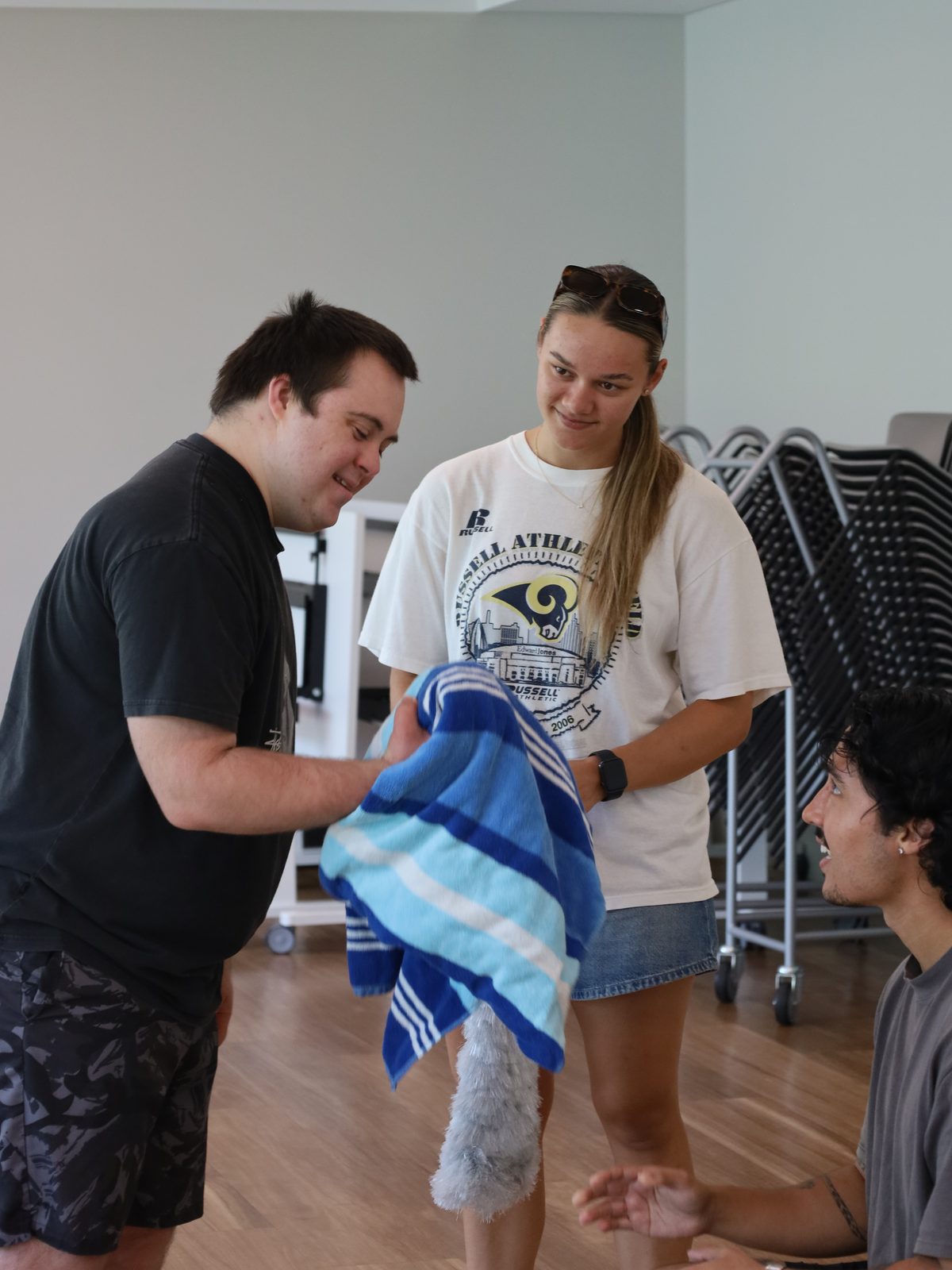
There's no term dates and no fixed curriculum. We start with the Mate and the people who know them best: what do they actually want to be able to do on their own? Make their own lunch. Catch the tram to the gym. Do the washing without being reminded. Pack their own bag for a getaway.
Then we break that one thing into its real steps, practise it where it actually happens, and repeat it until the prompts fade. We write down what was tried, what needed a nudge and what changed — so progress is something families can see, not something we assume.
The same familiar worker turns up each time, so the Mate isn't re-explaining themselves every week and the small wins stack. Much of what we practise at home gets its social workout at our group activities and community access outings.
Daily living support →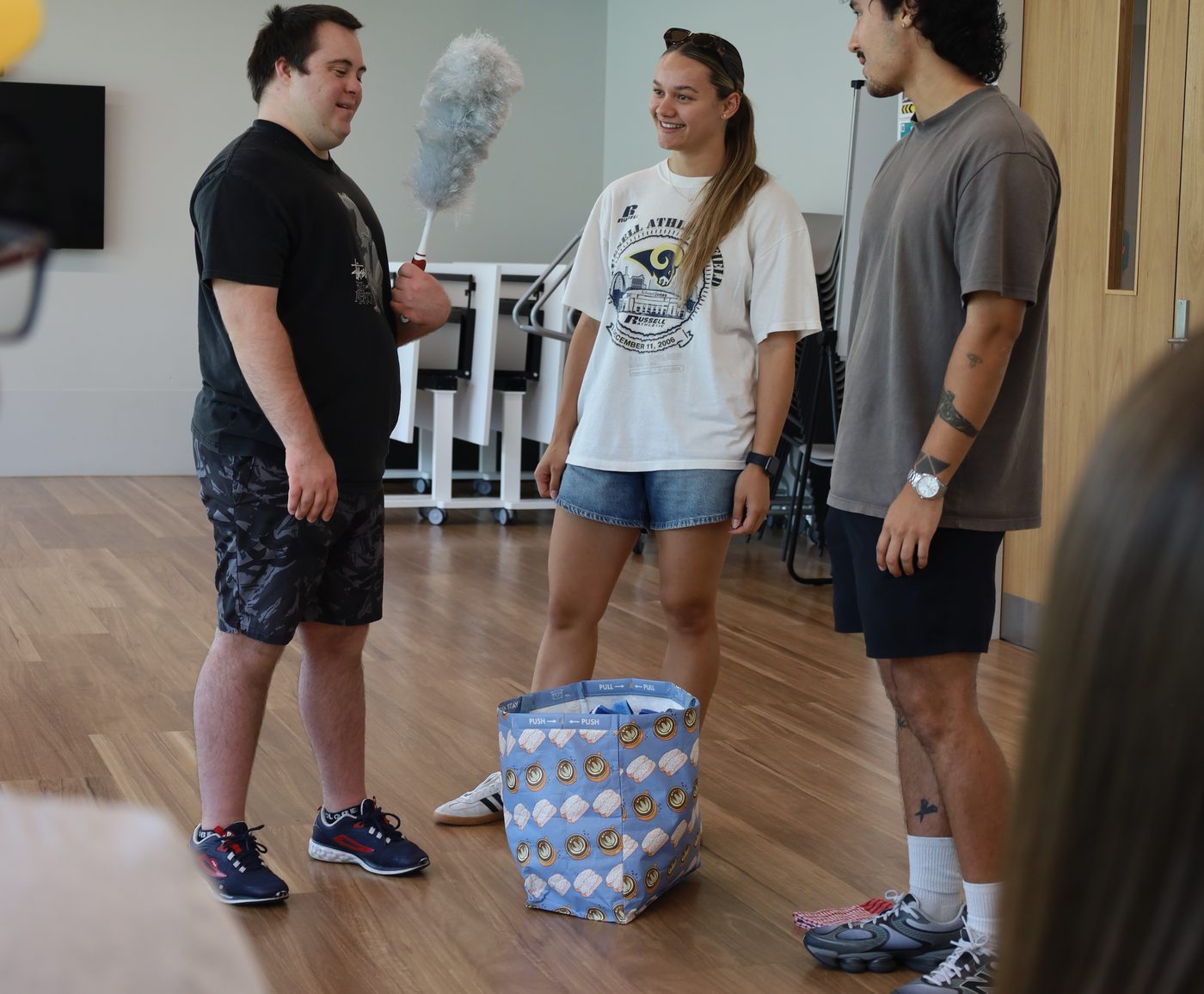
These are the skills Mates most often want. Nobody does all of them — we pick what matters to the person, in the order that makes sense for them.
Which utensil does what, what's hot and what's sharp, following a simple recipe, making a lunch or a snack start to finish — then eating it. Each step is a skill on its own.
What goes in the bag for the gym, the beach, a day out or an overnight stay — checking the weather, using a checklist, and knowing what you'd be stuck without.
Recognising notes and coins, checking there's enough, understanding change and tap-and-go, keeping track of pocket money and saving towards something you actually want. Practical skills, not financial advice.
Sort, wash, dry, fold, put away — at home or at the laundromat, in the order it actually happens, until it's a routine that runs without a reminder.
Topping up a go card, planning the trip, catching the bus or tram somewhere worth going — one route at a time until it's theirs.
Writing the list, finding things in the aisles, comparing two prices, asking staff for help, paying and checking the receipt.
Rehearse ordering a drink or lunch somewhere quiet, then do it for real at the café — with pictures or a card if that works better than words.
Dishes and the dishwasher, bins on the right night, wiping a bench, keeping a space tidy enough to find things — the quiet routines that make living more independently possible.
Hygiene routines, dressing for the weather, hats and sunscreen, buttons and shoelaces — handled with dignity, at whatever pace suits.
Mornings that start on time, a visual schedule that works, alarms and reminders set up so the day runs without someone else driving it.
Calling or messaging a trusted person, saving the numbers that matter, knowing when to call 000, and the basics of staying safe online.
Your address, a trusted contact's number, what's in your wallet and why, how to ask for help — and what to do when things feel too much.
Take laundry day. Here's the shape every Life Skills 101 session follows, whatever the skill.
Pick the skill
With the Mate and their family: "I want to do my own washing." Not our idea of what they should learn — theirs.
Break it down
Sort the colours. Load. Powder. Start. Dry. Fold. Put away. A visual step-by-step guide if that helps, pitched at the person.
Do it for real
At home or the laundromat, with a real basket of washing — not a role-play. The worker prompts only as much as needed.
Repeat, then step back
Same skill, next week, fewer prompts. We note what was tried, what needed a nudge and what changed, so everyone can see it moving.
Most Mates we support are 16 to 30, though we work with people from 10 to 40. The format follows the skill and the person.
Prefer a worker of a particular gender, or someone who shares an interest? Say so. The match matters more than the roster — here's what we look for.
Often, yes — depending on the participant's plan, goals and how it's managed. Sessions aimed at building a skill commonly relate to the Capacity Building category Improved Daily Living; day-to-day help with the same tasks generally sits under Core Supports (Assistance with Daily Life); small-group sessions can sometimes align with community participation supports. A support coordinator, plan manager or your my NDIS contact can confirm what applies to your Mate. We're a registered NDIS provider for the development of daily living and life skills, and we'll talk it through before anything starts — we never assume a support is funded.
No. There's no term, no intake and no set syllabus. Life Skills 101 is the way we run independence sessions, and each Mate's version is built around the handful of things they want to be able to do. You can start whenever onboarding is done — usually about a week once the paperwork's in.
Depends on the skill and the person. Home routines and anything personal are 1:1. Skills with a social side — a cook-up, laundry day, a shopping run — often go better in a small group of three to six, because watching a mate do it is half the lesson and the catching-up is the other half. Plenty of Mates do a mix.
Honestly, it varies — by the skill, the person and how often it gets practised between sessions. What we can promise is that you'll be able to see it moving: we record what was tried, what needed a prompt and what changed, and we fade the prompts deliberately rather than hovering forever. Some skills click in a few weeks; some routines take a season.
Yes — most home skills should be learned at home, in the kitchen and with the appliances the person will actually use. Skills that live out in the world (buses, cafés, shops) are learned out in the world. We'll suggest where each one makes most sense.
They sit side by side. Daily living support is help with the everyday tasks themselves; Life Skills 101 is the part of that time aimed at handing a task over to the person. Many Mates have both in the same week, often with the same worker.
Book a free discovery call and tell us the two or three things your Mate most wants to do on their own. Support coordinators can make a referral here. If life skills are one goal among several, the free 12-week support plan is a good way to map it all out.
Tell us the first two or three things and we'll map out what 12 weeks of Life Skills 101 could look like — free, no pressure.


